This is a family epic spanning over a century, filled with fire and rebirth, tracing a journey from a backyard garage to the world's pinnacle. To give you a more complete understanding of the soul of Arturo Fuente, I have divided this history into five key eras. This is not merely a business history, but a human drama about resilience and family honor.
The Backyard Flames and the Cuban Heritage (1912 – 1924)
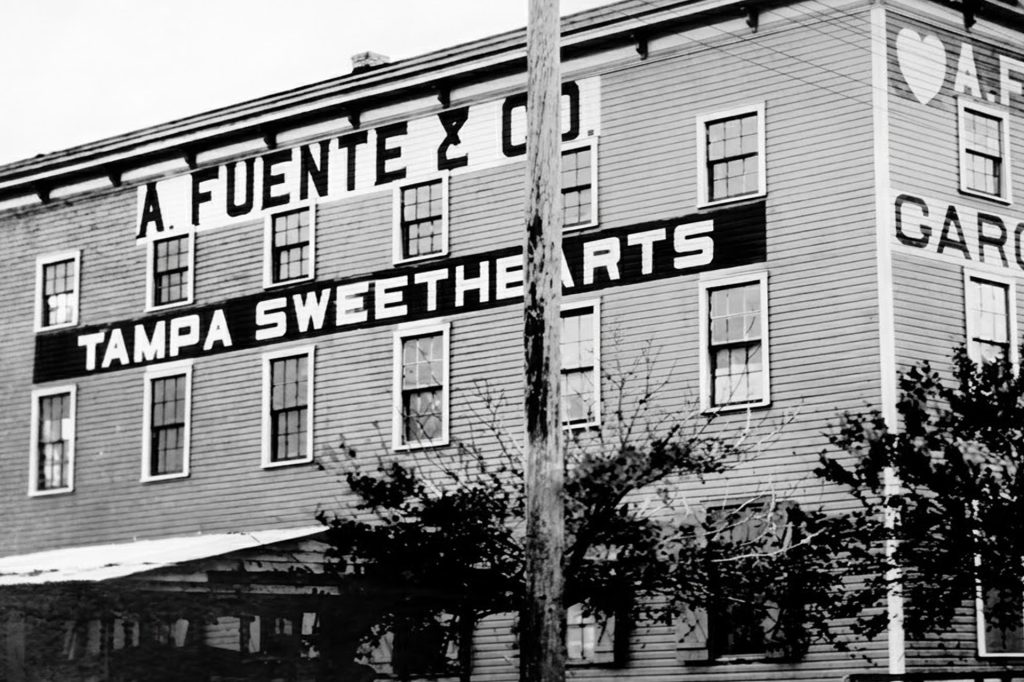
The story begins in 1912, on the west side of Tampa, Florida. At that time, Tampa was known as the "Cigar Capital of the World," with the air constantly thick with the spicy and sweet aroma of tobacco. Mr. Arturo Fuente, a 24-year-old immigrant of Cuban descent, built a small wooden rolling workshop in his own backyard.
At that time, Arturo, his wife, and their sons lived a life of working from sunrise to sunset. Arturo personally selected every tobacco leaf, while Doña Christina managed the operations. They did not chase scale; they only sought to ensure that every cigar handed out was worthy of the "Fuente" surname. However, fate played a cruel joke in 1924. A ruthless fire destroyed the factory Arturo had so painstakingly built. In an era without insurance and lacking capital, this fire nearly signaled the end of the brand. Arturo was forced to cease production and went to work in other cigar factories. This silence, lasting 22 years, was the darkest period in the family's history, yet it was also the time when their most resilient will was forged.
The Garage Reboot and the Legend on a Bicycle (1946 – 1960s)
In 1946, as the United States began the slow process of post-war reconstruction, Arturo's younger son, Carlos Fuente Sr., returned from the battlefield. Unable to bear seeing his father's dreams remain buried, and with Arturo's blessing, Carlos restarted the "Arturo Fuente" brand right from the family garage.
That was a true "cottage industry" period. Carlos would wake up early every morning to roll cigars, and in the afternoons, he would ride his bicycle through the streets of Tampa, peddling boxes of freshly rolled cigars door-to-door. His wife, Anna, helped with the packaging in the kitchen. Profits were razor-thin back then—sometimes earning only a few dollars a day—but Carlos always remembered his father’s teaching: "Money can be made again, but once your reputation is destroyed, it never comes back." This near-obsessive commitment to quality allowed Fuente cigars to slowly build a group of loyal followers in the local area.
The Embargo Storm and the Search for the "Dreamland" (1960s – 1980)
In the 1960s, the Cuban Revolution broke out, and the United States promptly implemented an embargo. This was a devastating blow to the Tampa cigar industry, which relied on Cuban tobacco. Many factories closed down, but Carlos realized this was an opportunity to redefine the brand.
He began searching the globe for land that could replace Cuban tobacco. He attempted to establish bases in Nicaragua and Honduras, but political turmoil and fires followed once again. In Nicaragua, his factory was burned down during the civil war, and Carlos nearly lost his life. During this period, the family faced immense financial pressure, but they refused to back down. Finally, in 1980, Carlos settled his family in the Dominican Republic. There, they discovered the Bonao region, which shared an extremely similar climate and soil to Cuba. This time, they didn't just rent a factory; they bought the land and established the famous Chateau de la Fuente.
The Counterattack of OpusX and the Dominican Awakening (1990s)
Entering the 1990s, Carlos's son, Carlito Fuente Jr. (the current leader), demonstrated extraordinary vision and courage. At that time, the industry generally believed that the Dominican Republic could only produce high-quality filler and was incapable of growing premium wrapper leaves. To break this curse, Carlito began conducting frantic experiments within the estate.
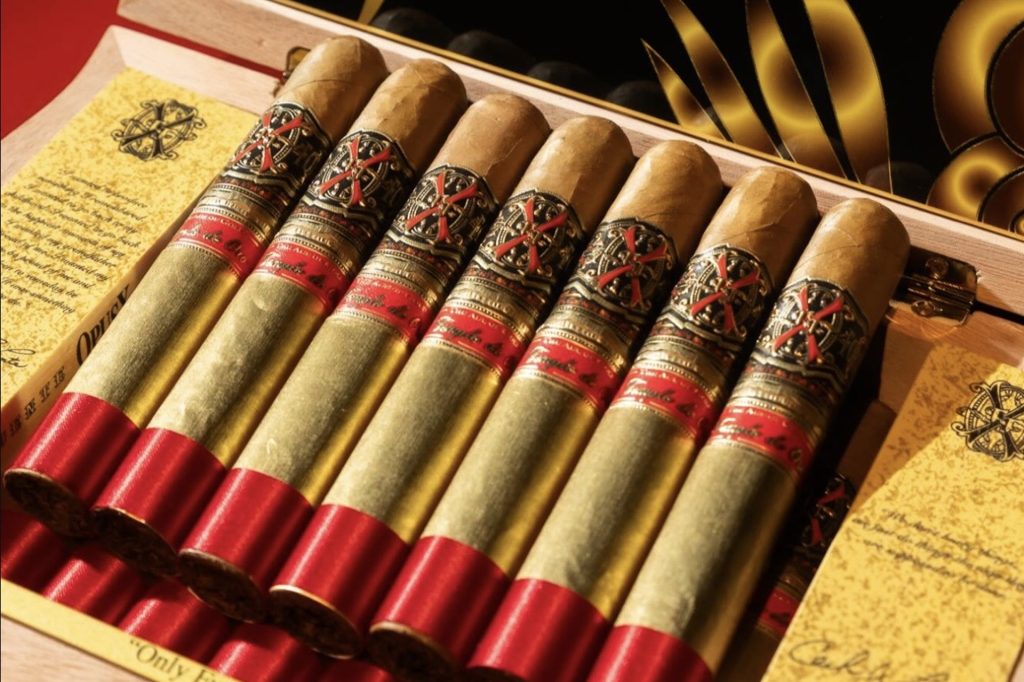
He introduced Cuban seeds and utilized the expensive, high-risk "shade-grown" method. At the time, all the tobacco merchants mocked him as the "crazy kid," predicting he would squander all of the family’s savings. However, in 1995, the OpusX was born. It was the first high-end Dominican Puro cigar in history; its rich, spicy, and multi-layered flavor profile instantly defeated countless established Cuban cigar brands and swept numerous awards from *Cigar Aficionado*. The success of the OpusX propelled Arturo Fuente from a high-quality family brand to a legendary sanctuary in the hearts of cigar lovers worldwide.
At the same time, to reclaim lost craftsmanship, Carlos Sr. unearthed old molds from the 1920s to develop the Hemingway series, reviving the extremely difficult-to-roll Perfecto shape. The success of these two major series established the brand's dominance at both ends of the spectrum: "power" and "elegance."
A Century of Glory and Social Responsibility (2000s – Present)
Today, Arturo Fuente has been passed down to the fourth generation. The brand is no longer just a synonym for cigars; it has become a lifestyle. Carlito established the Cigar Family Charitable Foundation, building schools, hospitals, and clean water systems in the Dominican Republic to give back to the land that granted them such glory.
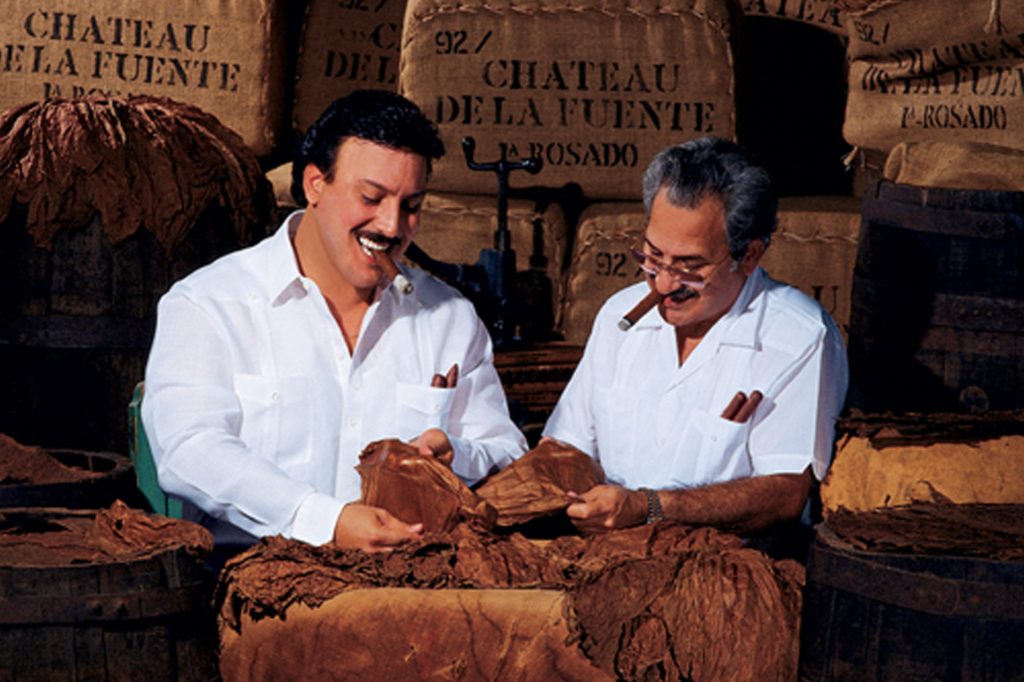
Even though the annual production is staggering now, when you walk into the Chateau de la Fuente estate, you can still see tens of thousands of cigars aging quietly in cedar rooms for years until they reach perfect balance. As Carlito often says: "We don't hurry time; we let time hurry us."
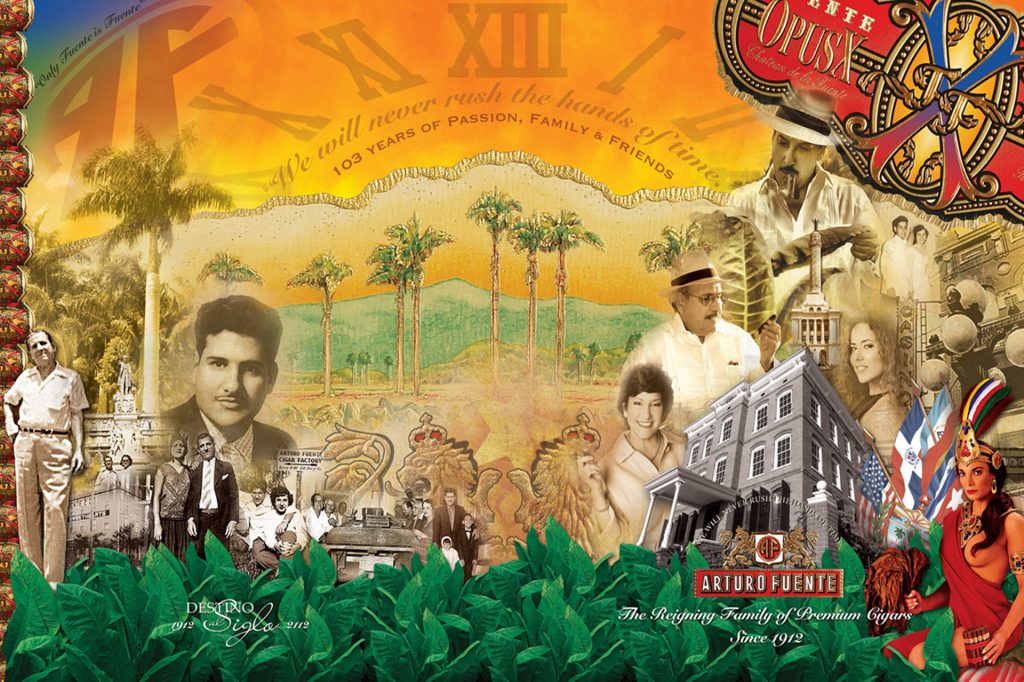
From the small spark in a backyard in 1912, to the ashes of 1924, and finally to the world's most influential cigar dynasty today, the history of Arturo Fuente is a biography of "indomitability." Every time a Fuente is lit, the curling smoke carries within it the glory of four generations and over 110 years of family legacy.
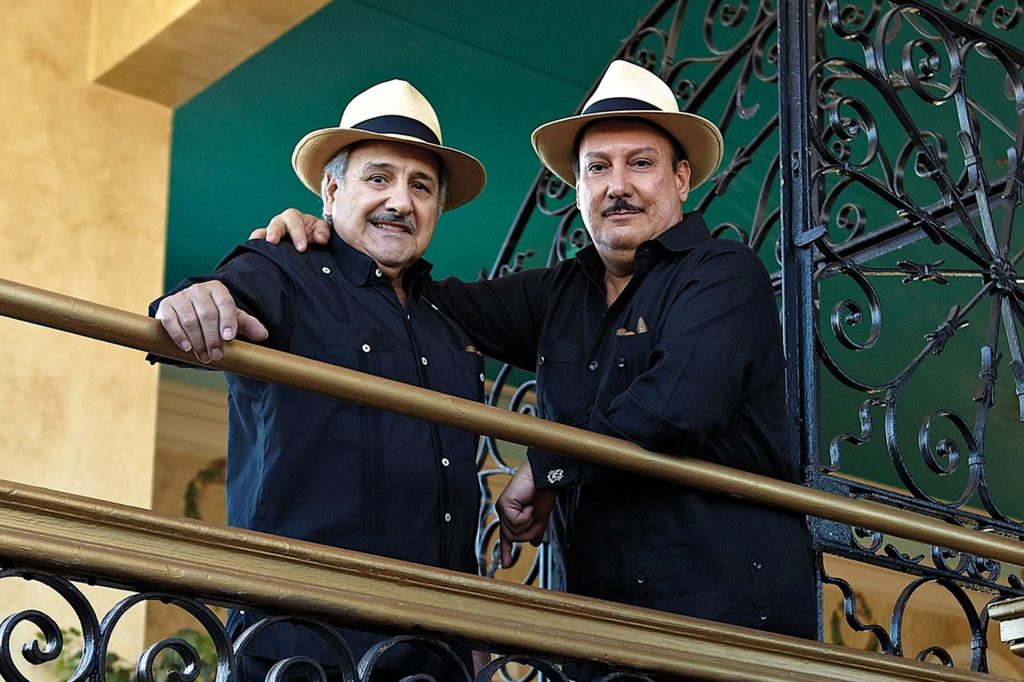

Arturo Fuente Welcome Night | TAIWAN 2025
In 2025, we officially designated Taiwan as the first stop for Arturo Fuente's Asian debut. This Welcome Night was not only a grand arrival for the brand but also symbolized a deep fusion of a century-old legend with Eastern culture. We sincerely invite you to experience that evening of passion and glory through our event video, witnessing the Arturo Fuente family as they write a new chapter of history in Asia.
OpusX: The "Forbidden Leaf" That Defied Fate
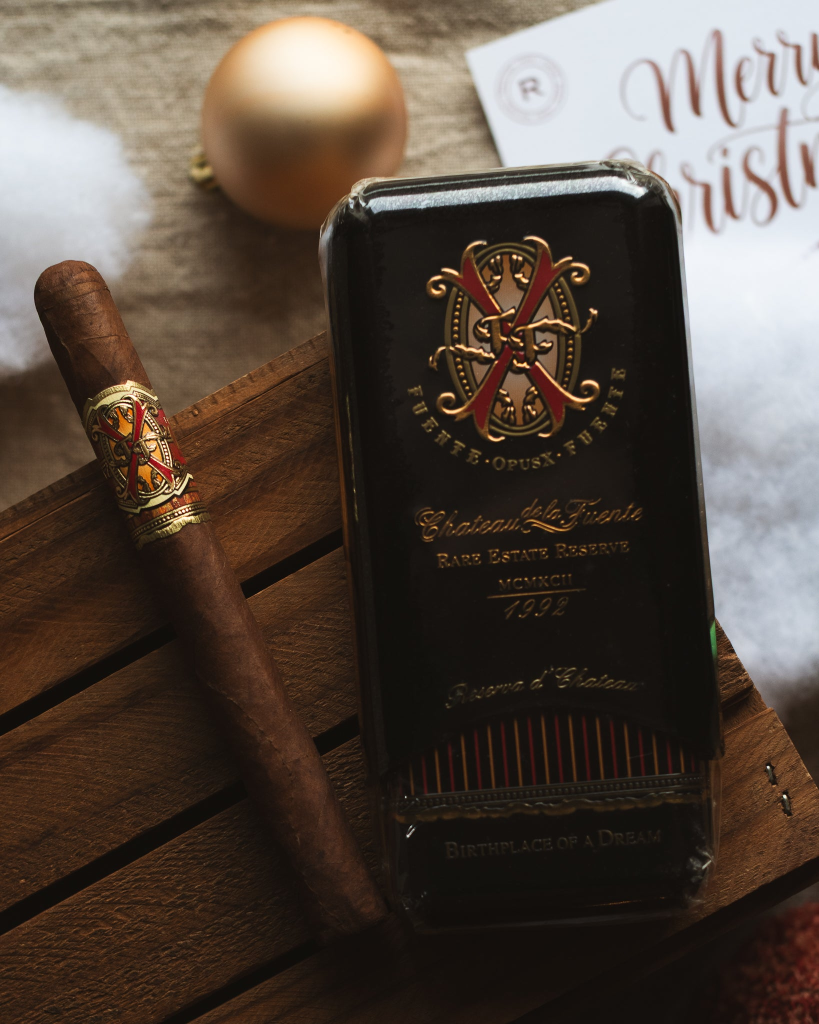
If there is an Everest of the cigar world, it is undoubtedly the Fuente Fuente OpusX. The birth of this cigar did not stem from a business plan, but from a mad revolution that wagered the entire family's reputation.
In the early 90s, although the Dominican Republic was a major cigar producer, it suffered from a fatal flaw: the local soil was widely recognized as "incapable of growing high-quality wrapper leaves." At that time, all Dominican cigars had to rely on imported Connecticut or Cameroon tobacco for their "packaging." Older generations of tobacco merchants even mocked the idea, saying, "Growing wrapper leaves in the Dominican Republic is as absurd as planting roses in the desert."
But Carlito Fuente Jr. refused to believe in the impossible. He set his sights on a piece of land in Bonao owned by the family called Chateau de la Fuente. The soil there exhibited a unique red hue, rich in minerals and volcanic ash; though it was barren and difficult to manage, Carlito saw in it a shadow of Cuba's Pinar del Río.
"It was an ordeal from hell," Carlito recalled. He introduced precious Cuban seeds and adopted the extremely bold "shade-grown" method (Tapado), covering the entire tobacco field with massive black nets to simulate the Cuban microclimate. However, nature did not favor him. Hurricanes, droughts, and pest infestations struck in succession, and the harvests of the first few years were nearly entirely destroyed. What’s more, competitors and experts were all waiting to see the young man fail.
Until 1992, a miracle occurred. That year's tobacco leaves displayed an unprecedented deep reddish-brown hue, with a texture as thick as leather yet shimmering with a silky, oily luster. When Carlito rolled these leaves into an all-Dominican cigar for the first time, he knew he had changed history. The OpusX was officially released in 1995; its explosive spiciness and complex sweetness of cedar and figs shocked the entire industry. It was more than just a cigar; it was the Fuente family’s declaration to the world: "Where there is a will, the land shall provide." To this day, the OpusX remains the most elusive dream item globally, with every single cigar representing those passionate years of defying fate.
Hemingway: The "Renaissance" of Lost Craftsmanship
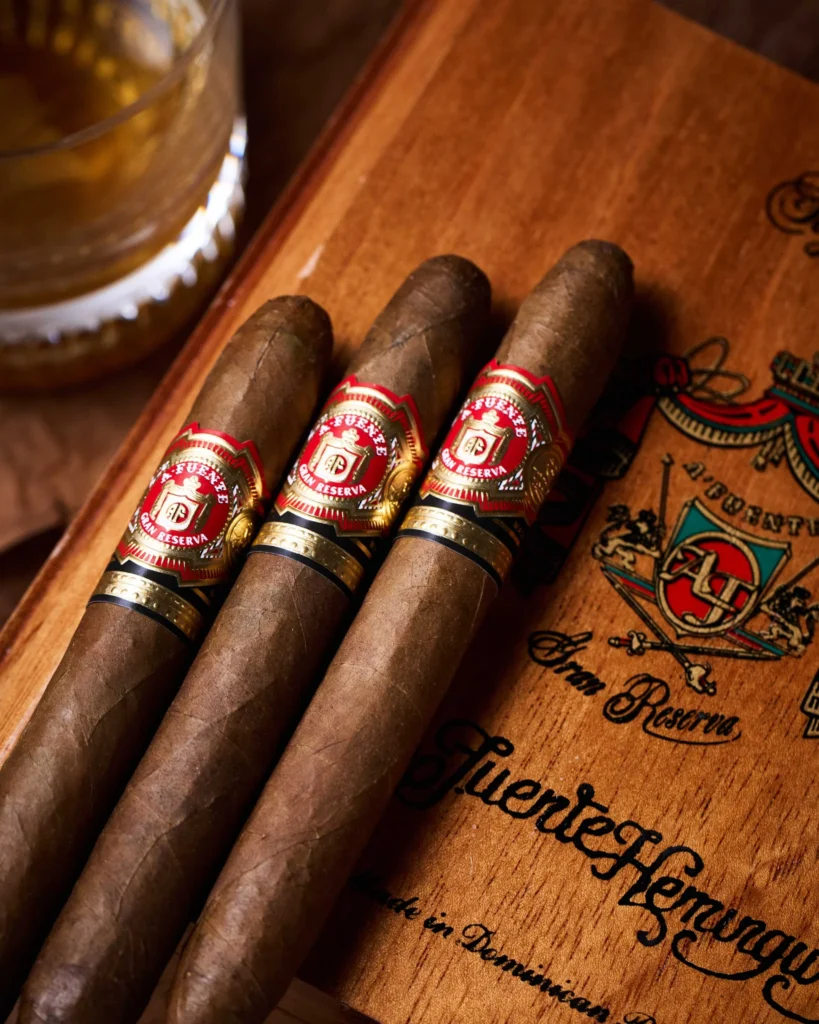
If the OpusX is the blazing sun, then the Hemingway series is the deep and elegant moonlight. Its legend lies not in the conquest of land, but in the "salvation of art."
Back in the 1980s, the cigar industry was in a dark age of chasing efficiency and mass production. Almost all cigars on the market were the cylindrical "Parejo" shape because they were the easiest and fastest to roll. Meanwhile, the Perfecto—the most exquisite shape in cigar history, tapered at both ends like a torpedo—had nearly vanished from the market due to the insanely demanding craftsmanship required to roll them.
One day, while clearing out an old family warehouse, Carlos Fuente Sr. happened upon wooden molds from the 1920s left behind by his grandfather’s generation. Looking at those elegant curves, Carlos felt a pang of sorrow—if he didn't do something, this art form would be lost forever. He decided to revive this shape that had been forgotten by time.
"This isn't for the money; it's for the legacy." Carlos brought together the most elite master rollers in the factory to re-research how to ensure this tapered cigar maintained perfect draw and burn rate. He selected the extremely rare African Cameroon wrapper, known for its natural sweetness. This leaf is exceptionally thin and fragile, manageable only by the most delicate fingers.
This series was named in tribute to the great writer Ernest Hemingway, who shared a profound love for Cuba and cigars, and lived a life defined by the spirit of adventure. Its most renowned vitola, the "Short Story," despite its compact size, unfolds layers of complexity akin to a symphony as the ring gauge evolves: beginning with the warm nutty aromas of the first light, transitioning into creamy cocoa through the middle, and culminating in a woody resonance at the finish.
When you pick up a Hemingway, you are holding more than just a cigar; you are holding the afterglow of the Golden Age of the 1920s. This cigar successfully made the world fall in love with the "Perfecto" shape all over again, and it solidified the Fuente family's supreme status as the "Guardians of Craftsmanship."