The story begins with a "beautiful accident" that forever altered the global cigar landscape. In the height of summer 1815, a tobacco factory in Florence had laid out massive quantities of precious Kentucky tobacco in its courtyard, greedily soaking up the Tuscan sun.
However, an unannounced thunderstorm struck, completely drenching the tobacco. Under the dual assault of high temperature and humidity, the tobacco underwent a violent chemical reaction inside the wooden barrels—an accidental "wet fermentation." To recoup the losses, the supervisor at the time reluctantly rolled this fermented, intensely smoky tobacco into cheap cigars, attempting to sell them at low prices on the streets. No one expected that this unprecedented, robust flavor and profound complexity would cause a sensation on the streets of Florence. That rebellious and intense aroma became a symbol of the miracle woven between nature and craftsmanship.
In 1818, under the authorization of Grand Duke Ferdinand III of Tuscany, the Toscano brand was officially born; that accidental rain had, from then on, nurtured a legend spanning two centuries.
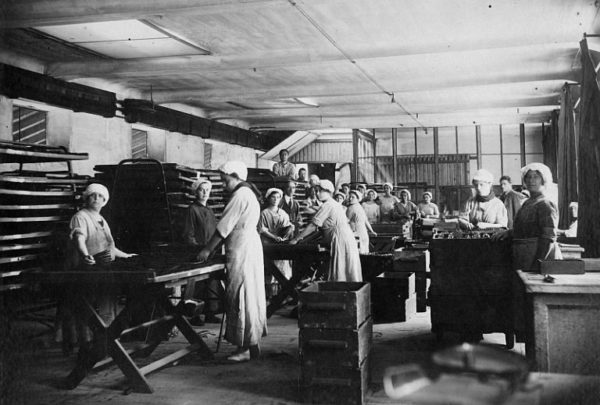
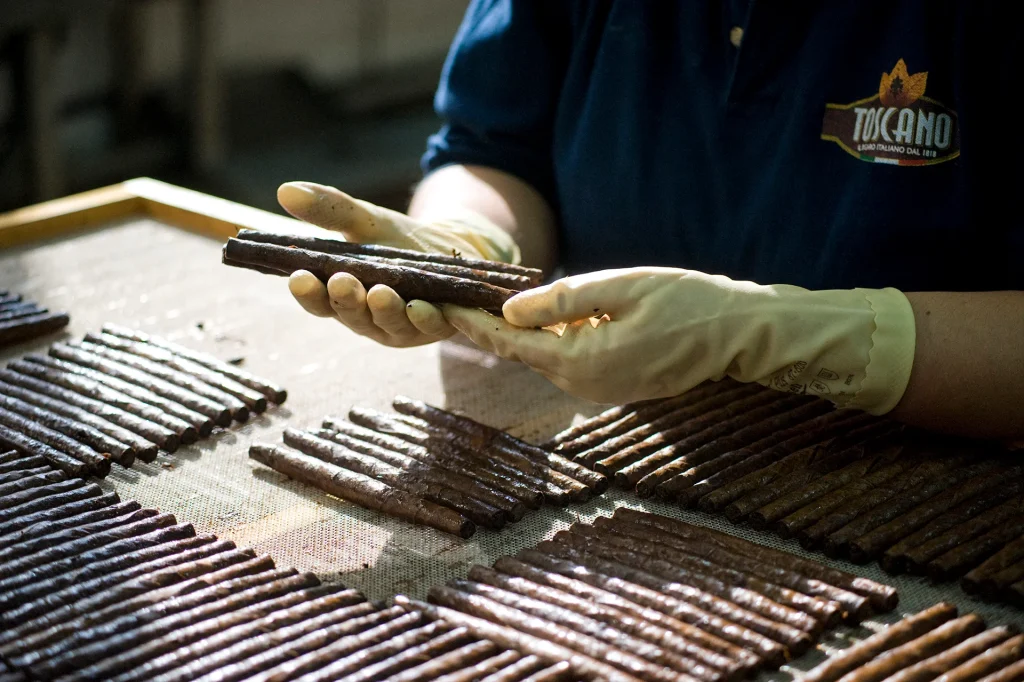
The reason Toscano cigars stand unique in the global cigar world stems from a near-obsessive persistence regarding "fire" and "time." Unlike the gentleness of Caribbean cigars, Toscano selects thick, resin-rich Kentucky tobacco leaves and subjects them to an ultimate ordeal: fire-curing. Master artisans use oak and beech wood for continuous smoking, allowing the tobacco to absorb woody spices and smokiness before entering a prolonged period of natural fermentation.
What is most celebrated is its "crooked (Stortignaccolo)" spindle shape; this is no flaw, but rather a result of the insistence on using no binder, wrapping the filler directly in the wrapper leaf. This minimalist yet pure construction grants it a uniquely resilient character—it possesses a stable vitality that requires no humidor to maintain.
This quality of "exhibiting the strongest vitality without the need for nurturing" is the most direct embodiment of the Italian artisan spirit.
Throughout the long years of the 19th and 20th centuries, Toscano gradually transcended its status as a tobacco product to become a totem of Italian culture. It accompanied the great composer Giacomo Puccini through countless late nights as he composed world-renowned operas such as *Tosca* and *La Bohème*, and it once graced the fingertips of King Victor Emmanuel II of Italy.
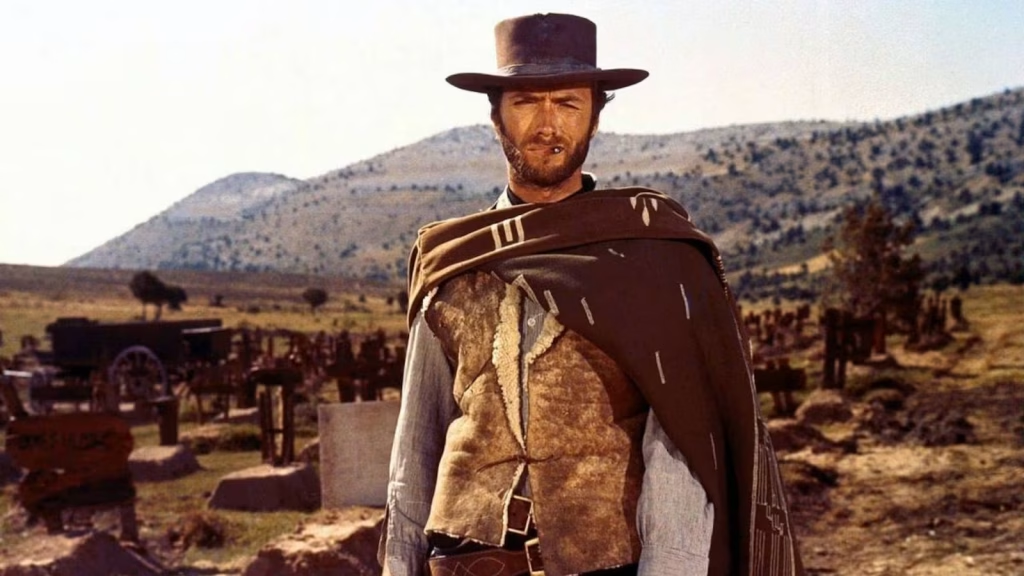
By the 1960s, with the rise of Spaghetti Westerns, Clint Eastwood—with his cold, piercing gaze and a rugged Toscano forever clenched between his teeth—transmitted this sense of Italian "tough-guy" romance to silver screens across the globe.
Even in 2006, when the brand underwent a significant transformation from state-owned to private management—brought back into Italian private ownership by the Maccaferri Group (MST)—this cross-class cultural influence never waned. Instead, the return to family management infused the brand with an even greater obsession with quality.
Stepping into the 21st century, this ancient evergreen has not remained stagnant within tradition; instead, it has demonstrated an astonishing and innovative vitality.
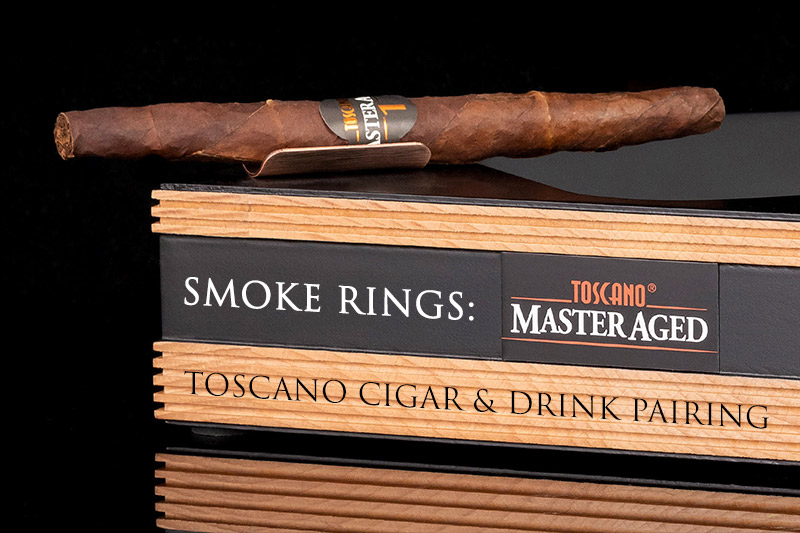
Recently, MST has once again proven the value of time through the success of the "Master Aged" series. Under the precise temperature and humidity control of professional maturation experts (*Affinatore*), the robust Kentucky tobacco undergoes a year-long aging process, transforming into a refined flavor profile reminiscent of leather and oak.
Even more striking is the 2025 launch of the "Toscano Robusto." This product boldly infuses the brand's proud, smoky soul into the internationally mainstream Robusto format, symbolizing Toscano embracing a new generation of enthusiasts with a more confident and open posture.
From that accidental summer rain in 1815 to its present status as the "Light of Italy" marketed worldwide, Toscano continues to recount an eternal tale of serendipity, persistence, and continuous evolution through its violet-hued clouds of smoke.